Introduction
Vrim Connect is one of the most recognized and renowned business verticals for the Inbursa financial group. Vrim is a service that allows customers to obtain various health services through a monthly, quarterly, or annual membership. Customers receive a number of health benefits such as minor medical expenses according to the membership they have purchased.
Prior to when I led the project, they were about to launch an application that aimed to digitize and centralize access to their medical services. However, on the first attempt, the launch failed due to a series of technical and usability obstacles that put the product's viability at risk.
They contacted me so I could reverse this complex situation. My role was as lead product designer where I had to completely redesign the app and form a solid work team to execute the new design in record time (3 months).
Objectives
Reverse a loss of 6 million pesos and make the app profitable to start generating revenue.
Identify opportunity areas in the current business model and work with the business. development team on alternatives that would allow users to find an attractive healthcare product.
Ensure a smooth and intuitive experience for the different types of users involved: patients, doctors, and corporate partners such as laboratories, pharmacies, and other technology partners like Huawei.
Conceive and propose an omnichannel plan for the future to offer health services.
First approach: Stakeholders interviews and workshops
Through interviews with key stakeholders, I began the process of gathering information about the current state of the application from a technical standpoint and also conducted an in-depth analysis of each of the features that comprised it, using a usability heuristics analysis.
During interviews with other stakeholders, I collected information about their main metrics, KPIs, success indicators, and the current state of the company from a financial perspective.
Subsequently, I guided a workshop to discover what the main success indicators would be from a usability standpoint, to finally draft what the KPIs would be with which I would measure the application's performance.
Definining an organized and solid workflow
Following the first stage, I met with the product owners, product managers, and marketing team members to establish a robust yet effective workflow to showcase deliverables, progress, definition of new functionalities, and continuous feedback, using 2 main methodologies: Google's design sprints and agile work methodologies (SCRUM). Similarly, I took charge of aligning a collaboration workflow with the development team to implement constant improvements and bug fixes.
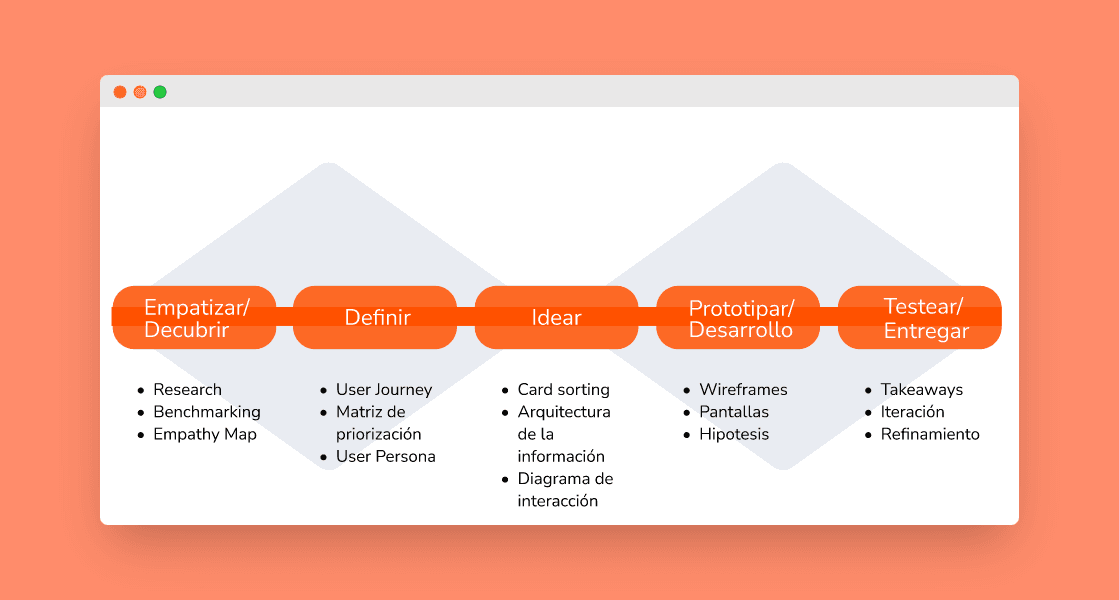
An overview of our general design team workflow.
Documentation of the workflow and how to's guidence
During the stage when I defined a work methodology together with the team, I documented our new process so that the rest of the organization would know the details about the design work, serving as a solid foundation for future reference. In this documentation, I categorized aspects such as design processes, user research processes, deliverable formats, and other important topics regarding user experience and interface development. Additionally, I documented information obtained from other stakeholders such as the business terminology glossary, sales practices, and the language of the different products that would comprise the business environment.
Team formation
Once the main foundations were established, such as roles, methodologies, deliverables, and specific tasks, it was time to form a new design team, which was comprised of 5 user experience designers assigned to each of the products that made up the business environment (the patient application, the doctor application, and the application oriented toward the business development team).
Teamwork and Multidisciplinary Collaboration (Definition Stage)
When the team was defined and everyone was clear about their roles and tasks, we collaborated with the B.I. team to define the scope of the new MVP and subsequent incremental releases.
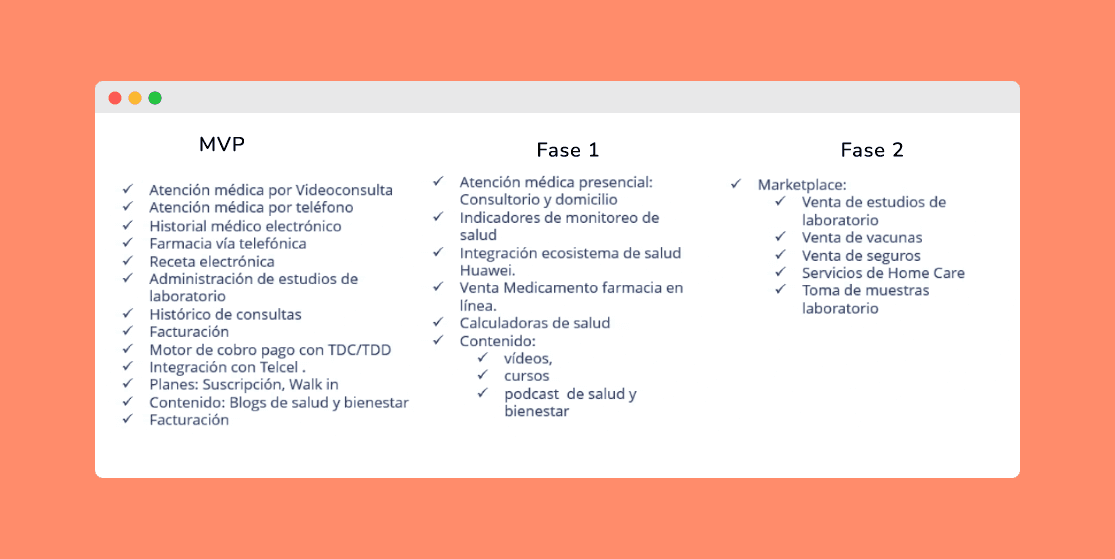
We defined an MVP and the incrementals for the future during a workshop with de BI team.
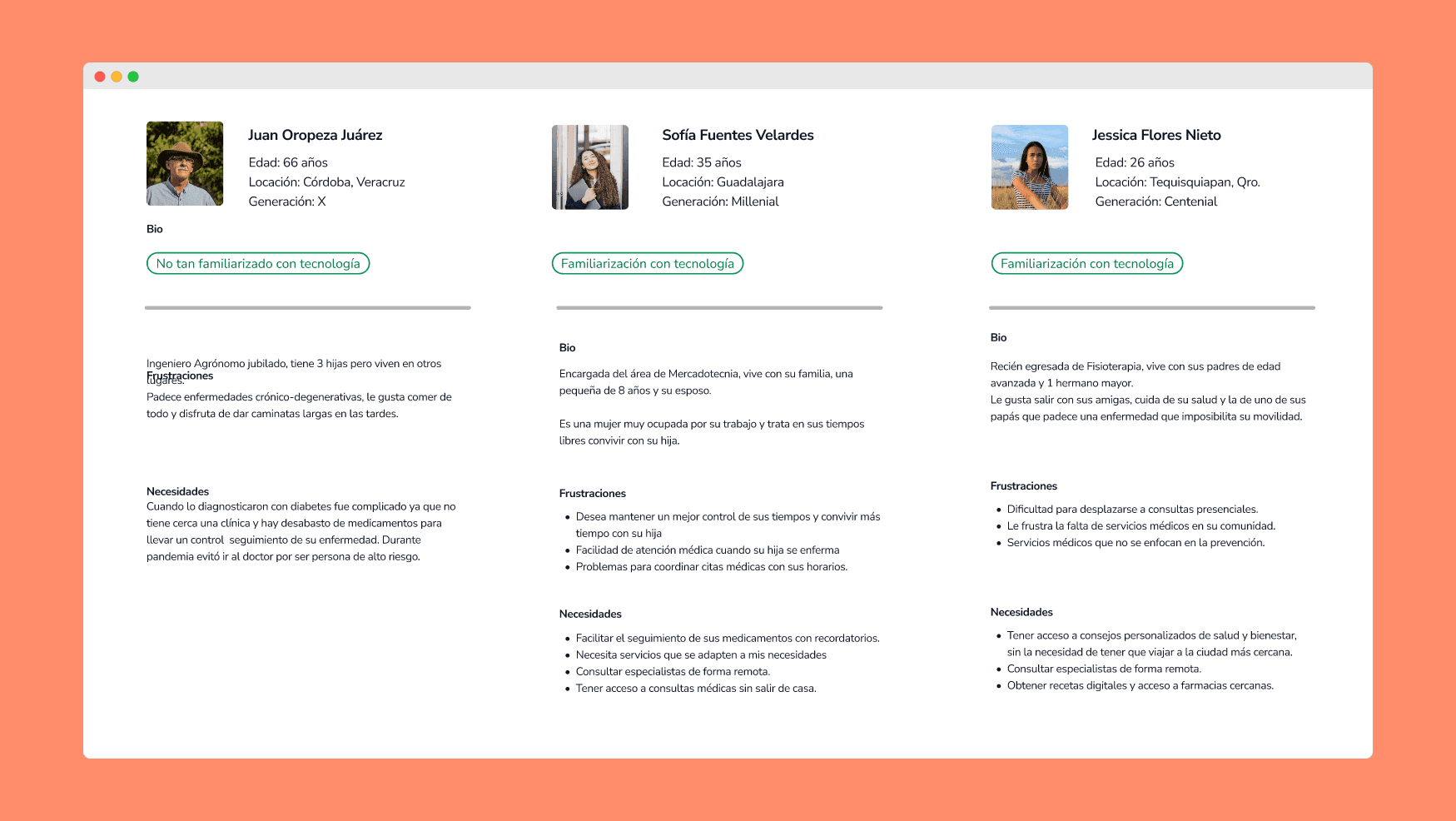
User personas
After the VMP definition the team was able to work on user personas and other valuable user research artifacts.
User stories
In order to collaborate with product team we used user stories to work in each MVP feature or findings from user stories, and user interviews.
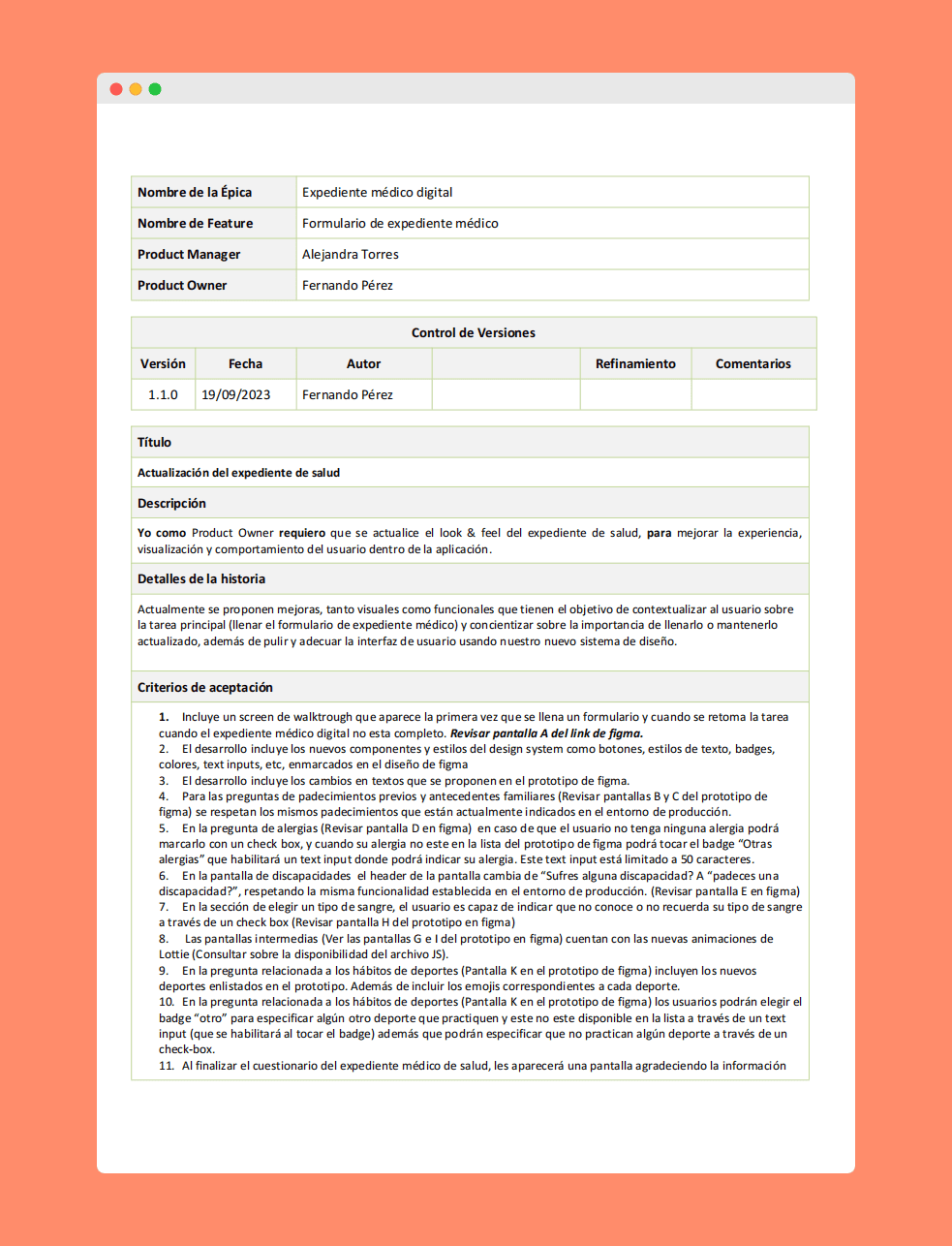
A quick example of User Stories templates from Product team.
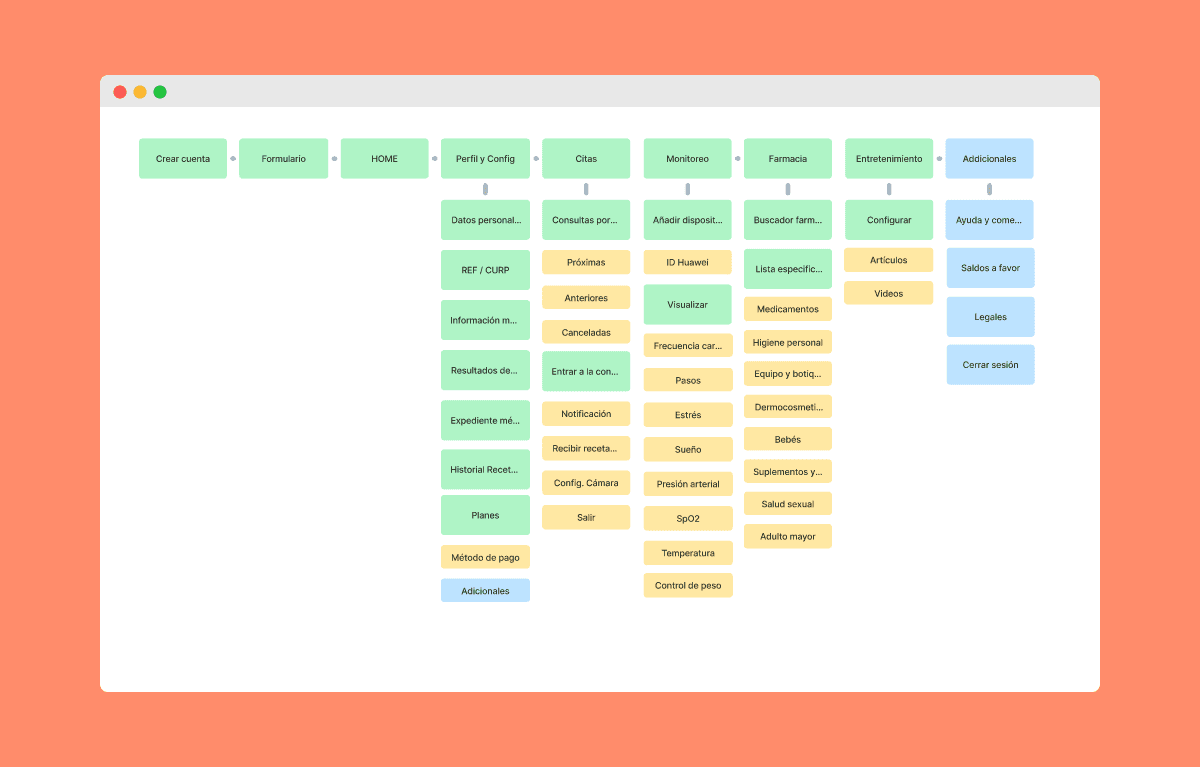
Information architecture diagram example provided by my team
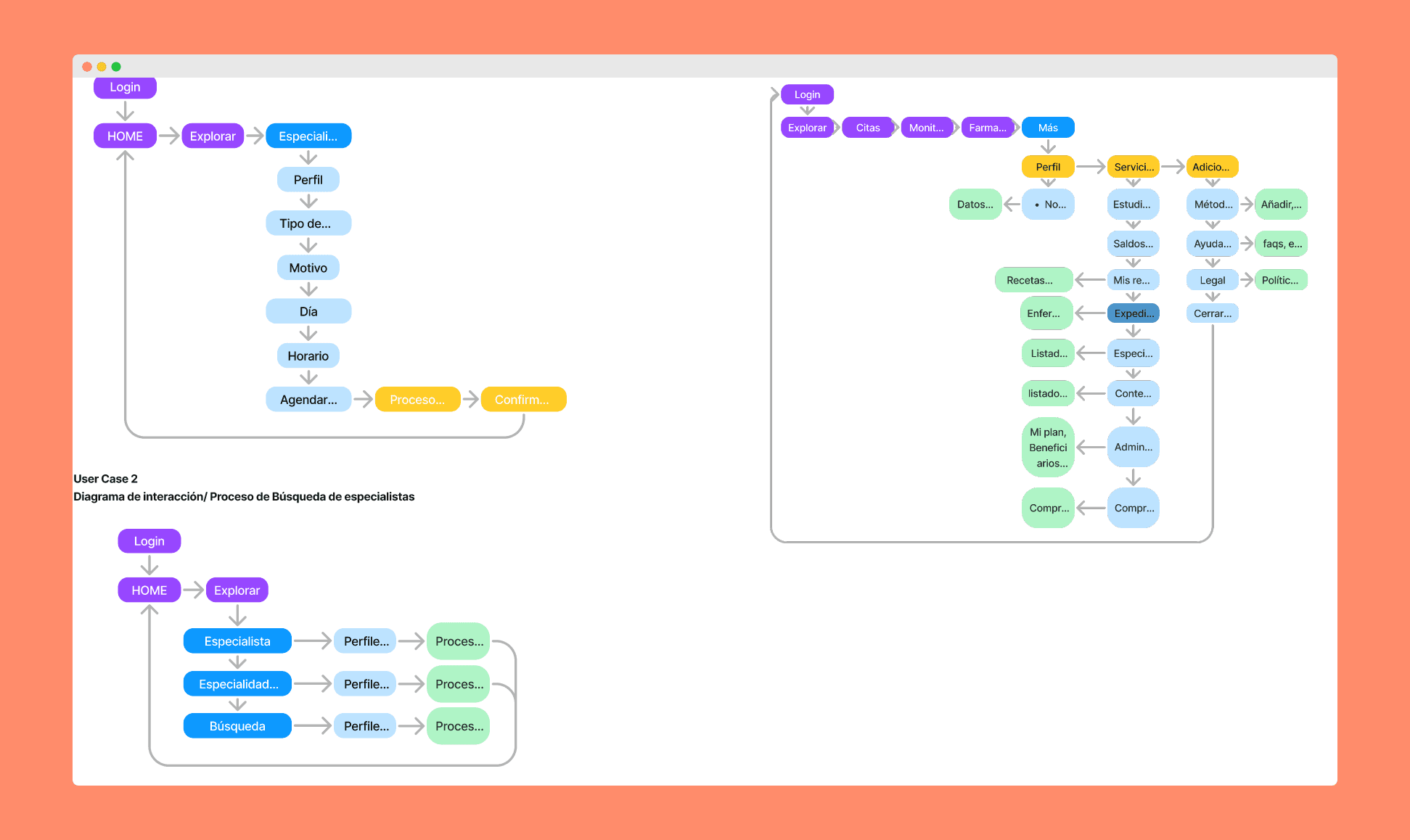
Some examples of user flows of common features of the app
Vrim One: Building a solid and extensive Design System
Before even jumping to the final design or wireframes, I proposed creating a design system as a common language for the different products that make up the application ecosystem. This design system not only consists of the most basic development components, but also includes the main interaction patterns and extensive documentation about the language, rhythm, and tone with which we address our users.
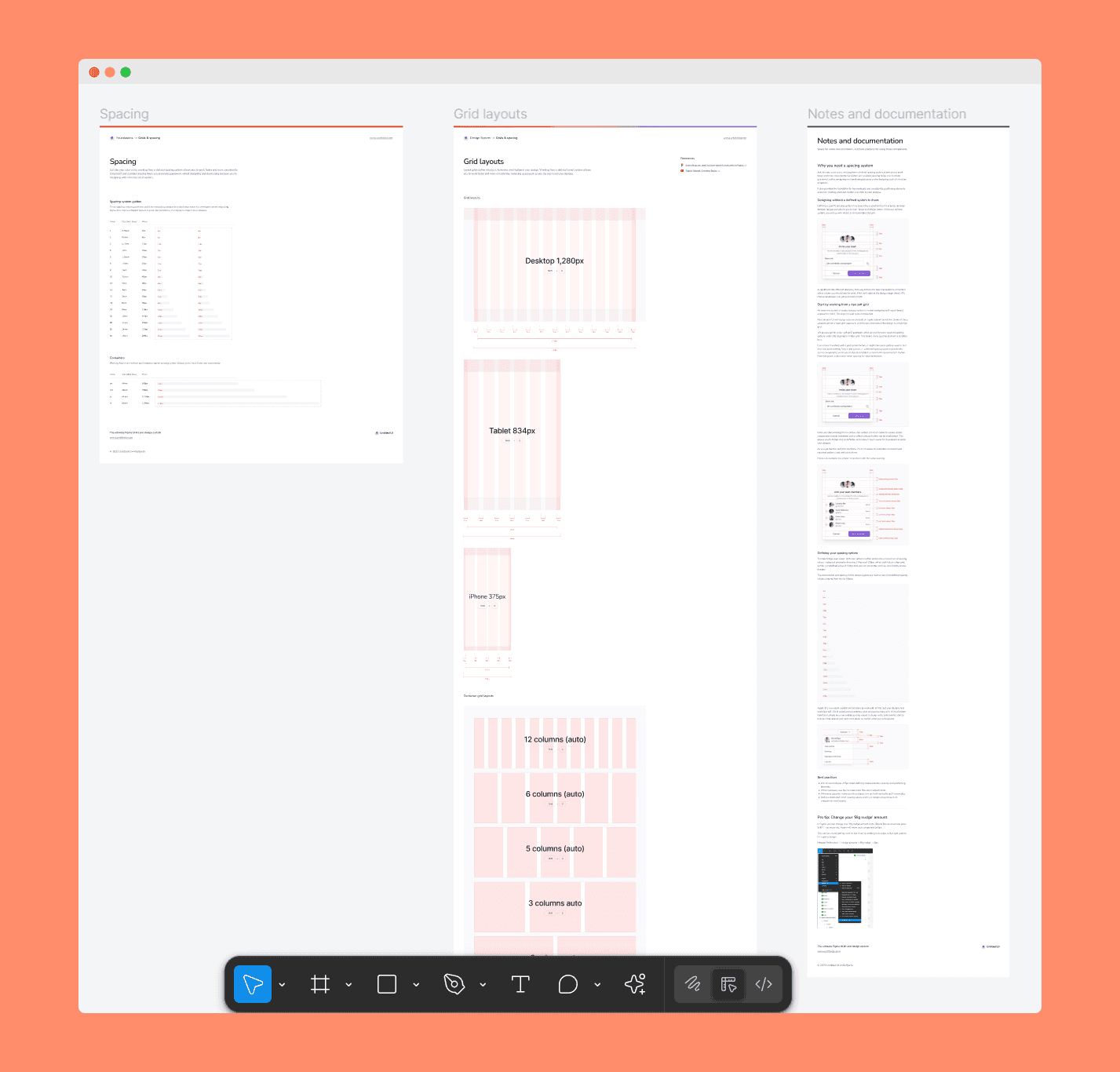
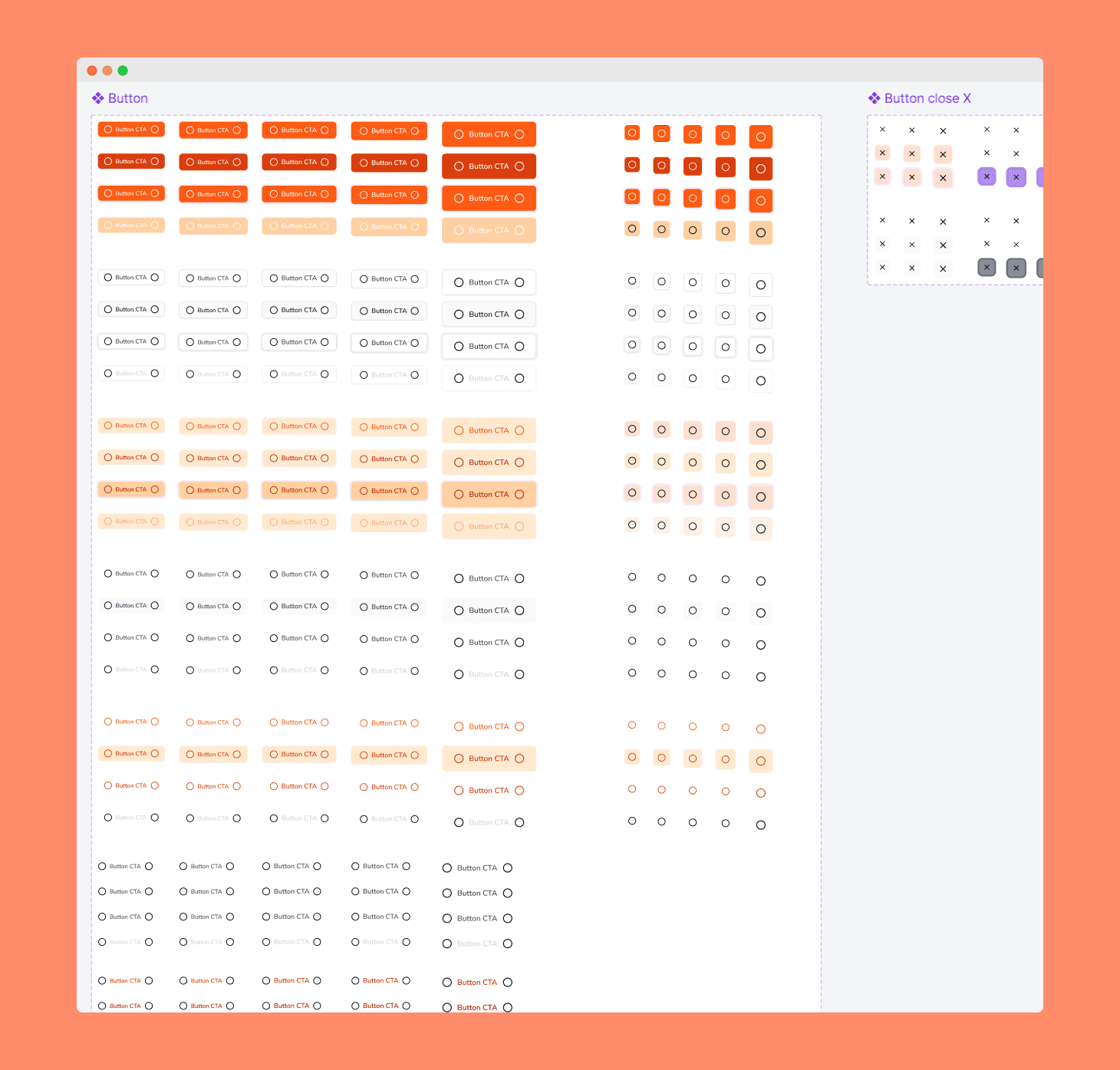
Some screens of "Vrim One" our own Design System
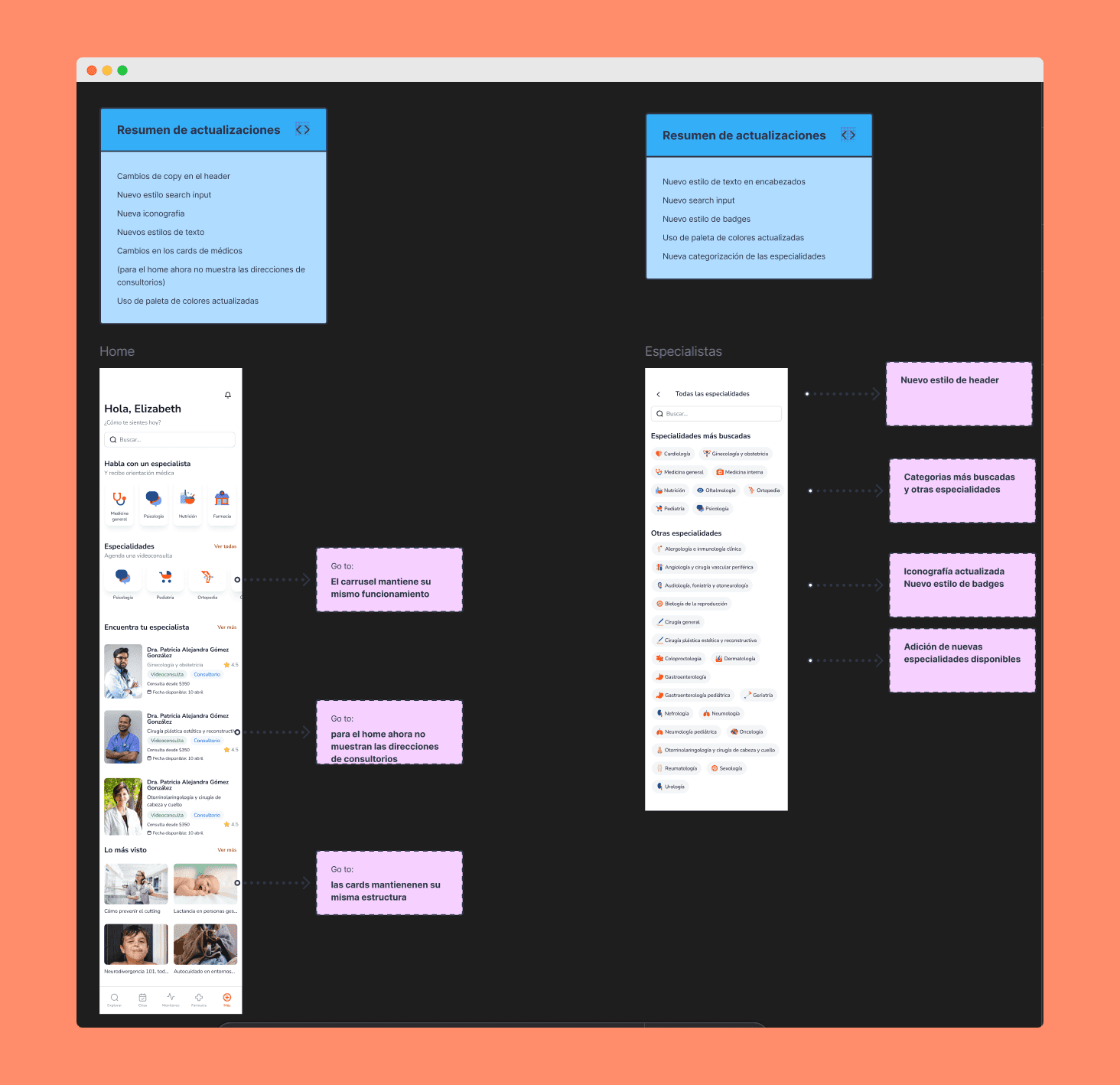
Some common user patterns were incluided into the Design System
Implementing the design system
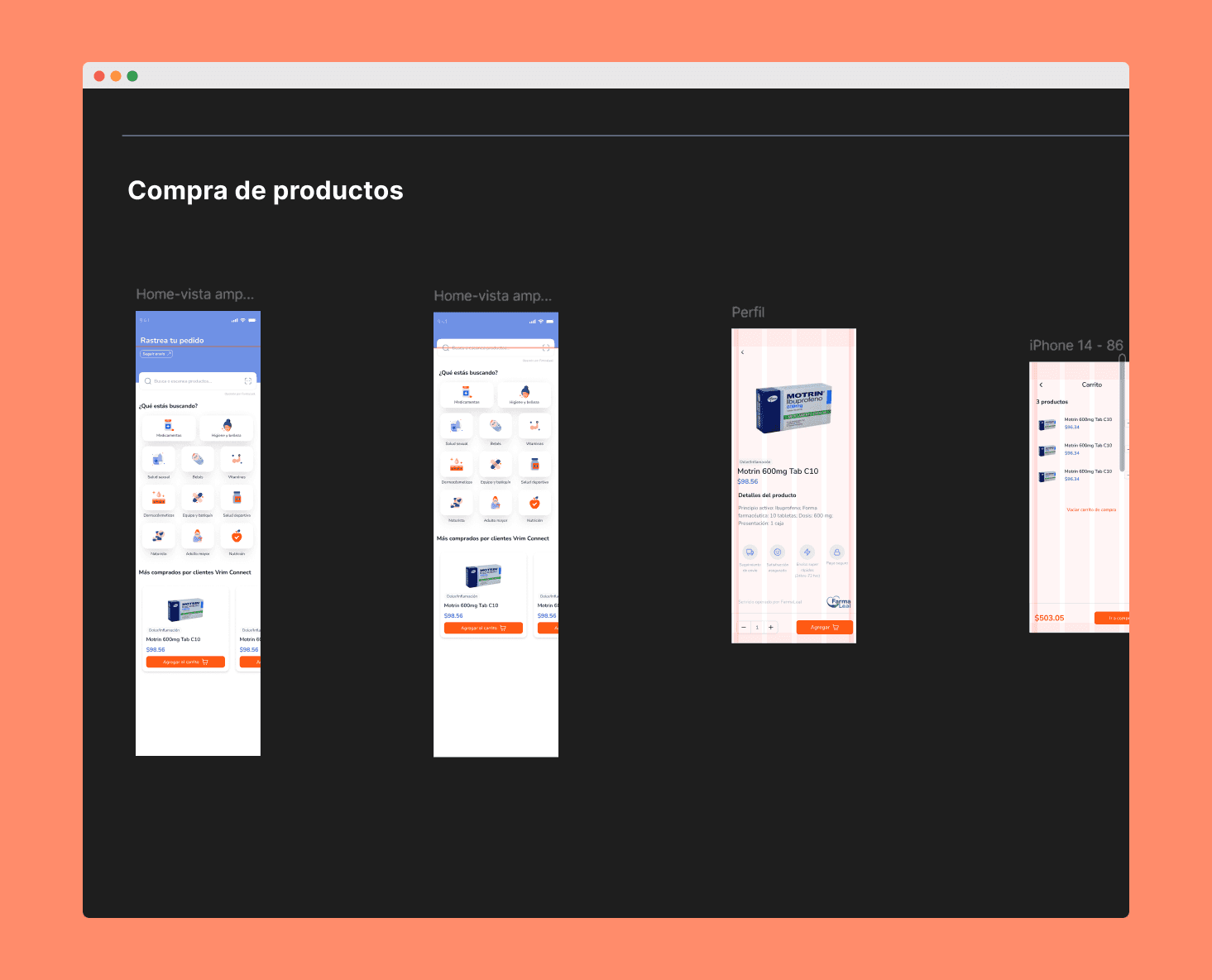
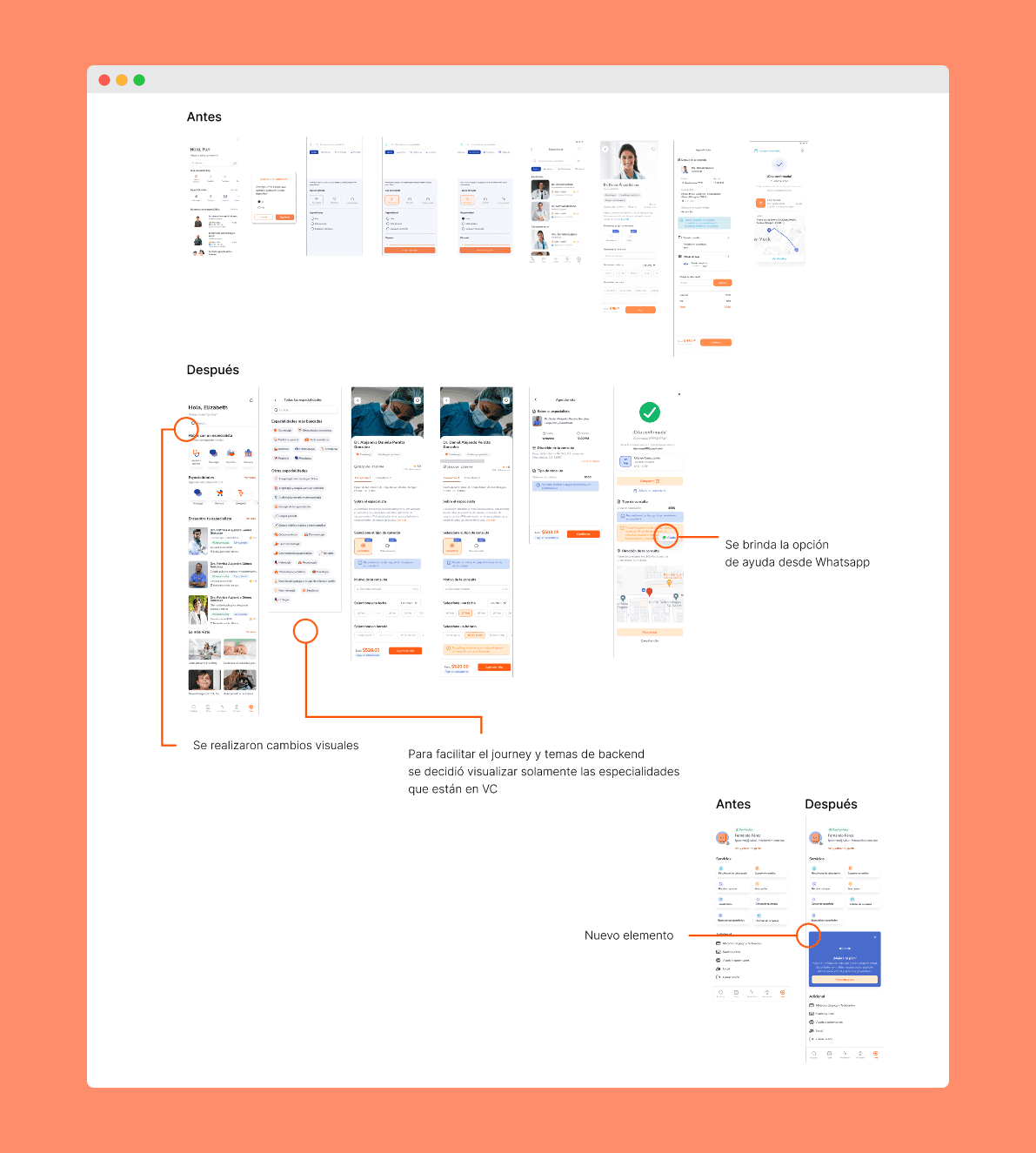
A quick before and after of some features of the app
Testing and continous validation
To validate that we truly satisfied the requirements of our user stories, my team constantly conducted validations that were supervised by me. Among these validations, we performed usability studies, user interviews, A/B testing, and other artifacts that sought to answer the questions we posed at the beginning of each test.
We sought to follow our north star through various metrics, such as TTSR (Task Success Rate), CR (Conversion Rate), AR (Adoption Rate), STA (Search to Appointment), among others like NPS (Net Promoter Score) that we implemented within our application.
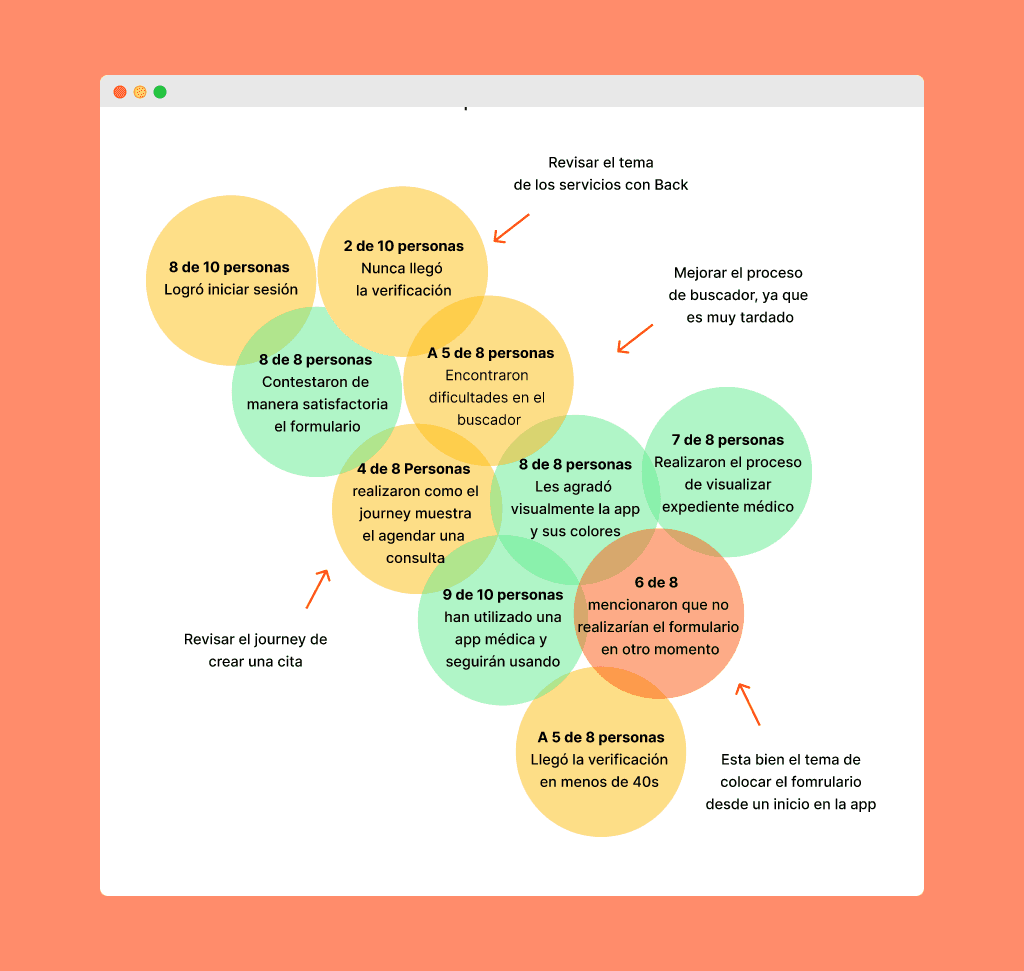
An example of some findings given after the secondary research via interviews, usability testing, etc.
Takeaways and conclusions
In fact, there was a considerable increase in the number of new users of approximately 25% growth not seen since the pandemic, which endorsed Vrim as one of the most reliable healthcare service options in Mexico.
Subsequently, this caught the attention of other Latin American participants where we were able to adapt our model for Ecuador, where the current government of Guayaquil offered these telemedicine services to its residents for free.